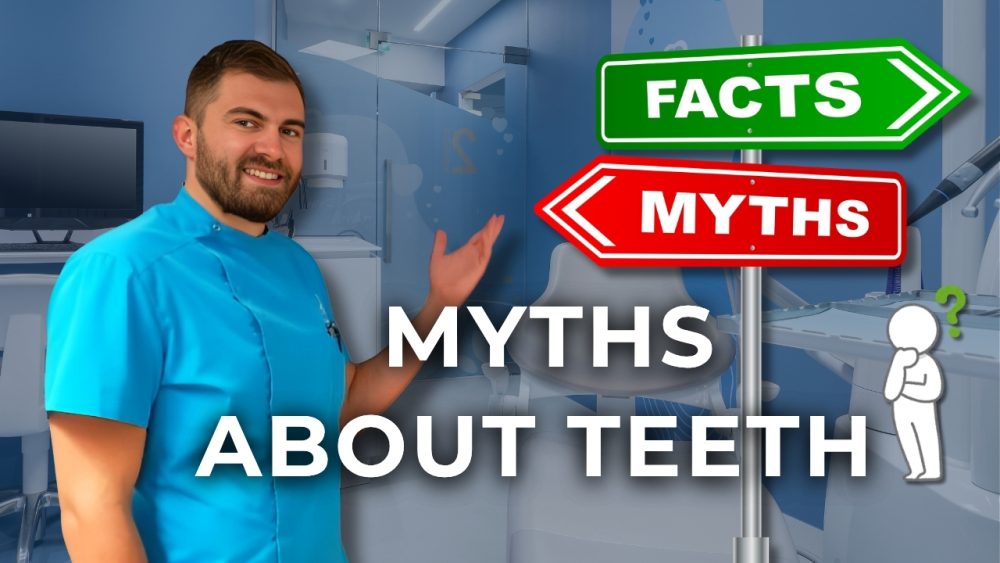
MOST COMMON MYTHS ABOUT TEETH
Some myths about teeth are so widely spread that we don’t even question their truthfulness.
However, it is extremely important to debunk these myths, because believing in them can harm our oral health!
In this week’s video blog from Dental Center 4Smile, we bring you the most common myths about teeth:
1. WHITE TEETH ARE HEALTHY TEETH:
While white teeth are often perceived as healthy, their color does not reflect their health. Teeth can be unhealthy or have cavities even if they are white! In fact, the very first stage of cavity formation begins with white spots on the tooth and demineralization.
2. SUGAR IS THE ONLY CAUSE OF CAVITIES:
Although sugar is a major contributor to cavities, any complex carbohydrate can break down into glucose, causing cavities and favoring cavity-causing bacteria.
3. BRUSHING HARDER CLEANS TEETH BETTER:
Brushing too hard can damage enamel and gums, leading to tooth recession and abrasion. A gentle yet thorough brushing technique is effective and healthy for your teeth and gums. Along with a gentle technique, always use a toothbrush with soft or medium-soft bristles!
4. YOU DON’T NEED TO VISIT THE DENTIST IF NOTHING HURTS:
Many dental problems do not cause pain until they are advanced.
Regular dental check-ups are key to the early detection and treatment of dental diseases.
5. FLOSSING OR USING AN ORAL IRRIGATOR IS A WASTE OF TIME:
90% of cavities form between the teeth!
These are places your toothbrush cannot reach.
That is why using dental floss or an oral irrigator is essential!
6. BAD BREATH ABSOLUTELY MEANS POOR ORAL HYGIENE:
While poor hygiene is a common cause of bad breath, it can also be caused by certain medical conditions, specific foods, and medications.
7. WISDOM TEETH MUST BE REMOVED:
Not everyone needs to have all their wisdom teeth extracted!
It depends on whether they are currently causing problems or will cause them in the future.
8. DENTAL HEALTH DOES NOT AFFECT OVERALL HEALTH:
Oral health is closely linked to overall health!
It is particularly connected to heart disease, diabetes, and other conditions.
9. YOU CAN OCCASIONALLY SKIP BRUSHING:
Regular brushing is necessary to maintain oral health.
Skipping it can lead to plaque accumulation, tartar buildup, gum inflammation, and other dental issues.
10. MOUTHWASH CAN REPLACE BRUSHING AND FLOSSING:
Mouthwash can help reduce bacteria in your mouth, but it CANNOT replace mechanical cleaning with a brush and cleaning interdental spaces with dental floss.
If you use mouthwash, avoid those containing alcohol, as they destroy the good bacteria in your mouth as well.
11. YOU SHOULDN’T BRUSH BLEEDING GUMS:
Bleeding gums often indicate gum disease, and continuing to brush thoroughly and clean interdental spaces is extremely important for improving your gum health.
12. YOU CAN WHITEN TEETH WITH AT-HOME METHODS OR CERTAIN TOOTHPASTES:
Whitening toothpastes are extremely abrasive, damaging tooth enamel and causing severe sensitivity.
With long-term exposure to these pastes, your teeth will actually become yellower because the dentin will show through more!
Dentin is the yellow layer of the tooth located under the enamel.
The only completely effective method is professional tooth whitening in a dental clinic, as it penetrates deeply and quickly, whitening the teeth to the maximum extent possible in an hour to an hour and a half.
13. TOOTH LOSS IS A NATURAL PART OF AGING:
With proper care, your teeth can last a lifetime!
Tooth loss is often the result of preventable conditions, such as gum disease.
14. SICK TEETH ALWAYS HURT:
Although pain is an obvious indicator of dental disease, it most often appears in the later stages of the illness!
To minimize potential damage from advanced dental disease, it is crucial to visit your dentist for a check-up at least once a year.