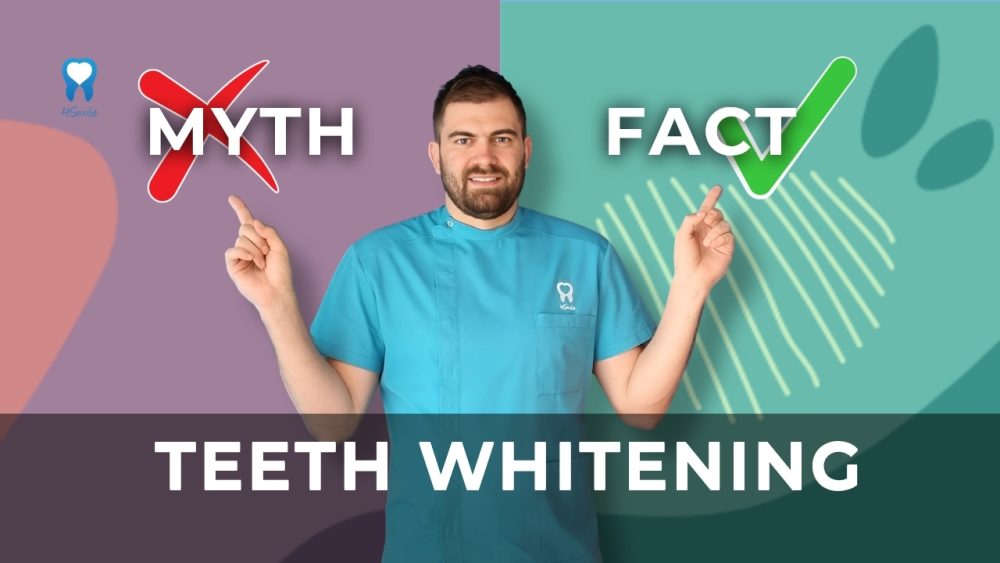
Teeth whitening: Myths and facts
Professional teeth whitening is one of the most popular cosmetic dental procedures, but it is also a topic surrounded by many misconceptions. From DIY remedies using baking soda and lemon to the belief that whitening ruins your teeth: the internet is full of advice that isn’t always accurate.
If you are considering teeth whitening, it is important to separate fact from myth. Below, we answer the most common questions, explain how professional teeth whitening works, and show why it is the safest choice for achieving a radiant smile.
What is professional teeth whitening?
Professional teeth whitening is a cosmetic dental procedure that uses specialized gels and a lamp to safely lighten the natural color of your teeth. Unlike over-the-counter products or home methods, the treatment is conducted under dentist supervision using controlled concentrations of active ingredients that effectively remove pigmentation from the internal structure of the tooth.
The result is a brighter, more natural smile without damaging tooth enamel.
Myth 1: Teeth whitening ruins tooth enamel
Fact: Professional teeth whitening is safe for teeth
One of the most common misconceptions is that whitening agents “corrode” or erode teeth. The truth is that professional teeth whitening, when performed by a dentist, does not damage enamel. Proven materials and controlled protocols are used to effectively lighten teeth while preserving their structure. Most importantly, whitening should always be performed after an examination to ensure your teeth and gums are healthy.
Myth 2: Baking soda is best for whitening teeth
Fact: Prolonged use can damage enamel
Baking soda is frequently mentioned as a natural tooth whitening agent. While it can remove some surface stains, its abrasive properties can wear down the protective layer of tooth enamel over time. This can result in increased tooth sensitivity and a higher risk of cavities.
For this reason, dentists do not recommend regular teeth whitening with baking soda.
Myth 3: A single whitening treatment lasts a lifetime
Fact: Results depend on your habits Professional teeth whitening provides long-lasting results, but no treatment lasts forever. How long teeth remain bright depends on:
- dietary habits
- consumption of coffee, tea, and red wine
- smoking
- oral hygiene
- natural tooth shade. For most patients, the effects last several years, after which a touch-up can be done if needed.
Myth 4: All whitening toothpastes actually whiten teeth
Fact: Most only remove surface stains
Whitening toothpastes often give the impression that they can change tooth color. In reality, most contain abrasive particles that scrub surface pigmentation off the enamel, but they cannot change the natural shade of the tooth. Only professional whitening agents work inside the structure of the tooth to achieve genuine lightening.
Myth 5: Teeth whitening works equally on all teeth
Fact: Dental restorations cannot change color
Professional teeth whitening works exclusively on natural teeth. This means that the treatment will not whiten:
- fillings
- ceramic dental crowns
- ceramic dental veneers
- dental bridges and other dental restorations. If you have restorations in your smile zone, your dentist will plan treatment in advance to ensure an even, harmonious color across all teeth.
Myth 6: Lemon and natural remedies are safe for whitening teeth
Fact: Acids can permanently damage tooth enamel
Social media is full of tips recommending lemon for tooth whitening. The problem is that citric acid erodes tooth enamel. Once damaged, teeth can become more sensitive and prone to wear and staining. Because of this, natural remedies are not a safer alternative to professional whitening.
Myth 7: Professional teeth whitening is painful
Fact: Only temporary sensitivity is possible
The whitening procedure itself is not painful. Some patients may experience temporary sensitivity to hot or cold, which usually subsides within a few days. Your dentist can recommend special desensitizing preparations if needed.
Who is a candidate for professional teeth whitening? The best candidates are individuals who have:
- healthy teeth and gums
- natural teeth without major cosmetic restorations in the front
- staining caused by food, drink, or smoking
- a desire for a naturally brighter smile. A dental examination is recommended prior to any whitening procedure to check for cavities, gum inflammation, or other issues that need to be addressed first.
How to maintain teeth whitening results
To keep your results lasting as long as possible, it is recommended to:
- brush regularly and use dental floss
- get professional dental cleanings
- reduce coffee, tea, and red wine intake
- avoid smoking
- attend regular check-ups. Proper oral hygiene is the best way to maintain a brighter smile for the long term.
Professional teeth whitening is a safe and effective way to achieve a brighter smile when performed under dentist supervision. Unlike home methods and internet “tricks,” professional treatments do not damage tooth enamel and provide predictable results.
Before trying baking soda, lemon, or other DIY remedies, consult your dentist. A professional evaluation is the best way to achieve your desired results while fully preserving the health of your teeth.
Frequently asked questions about teeth whitening (FAQ)
Is professional teeth whitening safe?
Yes. When conducted under dentist supervision, professional whitening does not damage tooth enamel and is considered a safe procedure.
How long do whitening results last?
Results can last several years, depending on diet, smoking, oral hygiene, and lifestyle habits.
Can I whiten dental crowns and veneers?
No. Professional whitening agents only work on natural teeth, while ceramic and composite restorations do not change color.
Are whitening toothpastes effective?
Most toothpastes remove surface stains, but they cannot change the natural shade of your teeth.
Is whitening painful?
No. The procedure itself is not painful, though some individuals may experience temporary, mild sensitivity that quickly resolves.