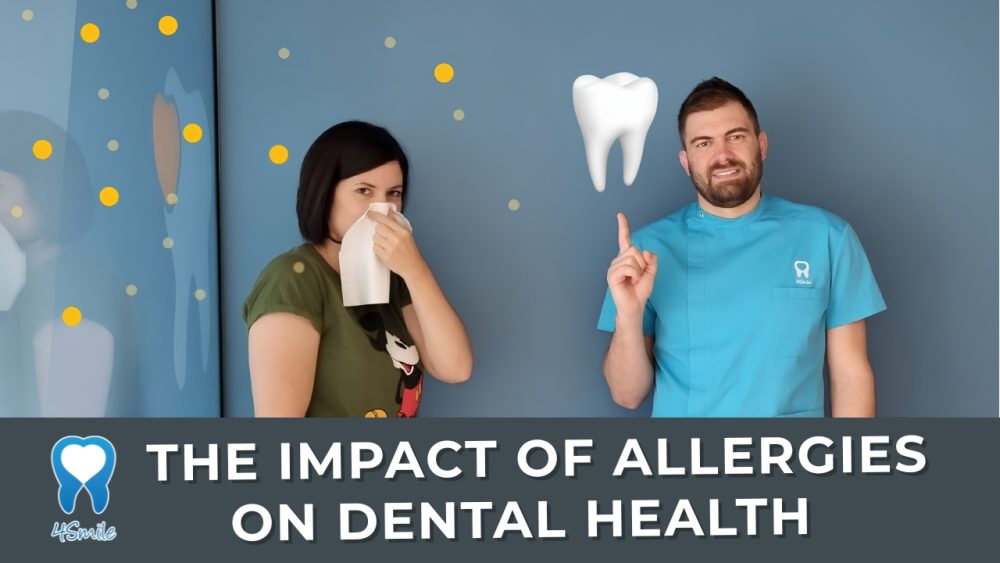
Spring is a season full of allergens, and besides the usual unpleasant symptoms, allergies can also affect the health of your teeth. In this week’s blog from Dental Center 4Smile, learn how allergies impact dental health and what types of allergies may be present during dental treatment.
It is common for people with allergies to suffer from itching, watery eyes, and a blocked or runny nose. Although general awareness of allergy symptoms is good, there is less awareness that allergies can also cause toothaches, cavities, or a sore throat.
On the other hand, dry mouth, tooth sensitivity, tooth pain, sore throat, and mouth sores can be allergic reactions to food and medications.
These symptoms may also indicate more serious health conditions, which is why regular dental check-ups at Dental Center 4Smile can help with diagnosing such issues.
Allergies can therefore be a cause or a contributing factor to dental problems. Below, we explain how allergies can affect dental health.
MOUTH BREATHING
A consequence of allergic symptoms is excessive mucus production, which can block airways and make nasal breathing difficult. As a natural response, the body switches to mouth breathing.
Mouth breathing is a habit that can lead to several oral health problems.
Some studies have shown it can even result in a “gummy” smile, facial development issues in children, and complications for overall oral health.
If you breathe through your mouth, you may not even be aware of it.
That’s why it’s important to recognize common signs and symptoms so you can seek treatment before serious problems develop.
Since we breathe frequently and the mouth often stays open, mouth breathing reduces saliva production and dries it out. A lack of saliva creates favorable conditions for harmful acids and bacteria, leading to cavities and bad breath.
Dry mouth is also one of the causes of gum disease – a serious dental issue that can contribute to health problems throughout the body, including stroke, heart disease, and heart attack.
Common signs and symptoms of mouth breathing include:
- Dry lips
- Crowded teeth
- Snoring
- Sleeping with an open mouth
- Chronic bad breath
What can you do?
Patients who experience dry mouth year-round due to allergies often end up with pain and damaged teeth. If allergies affect your ability to breathe properly, there are ways to relieve symptoms and protect your health.
Start by consulting your dentist, Ivan Antolković, at Dental Center 4Smile. They can recommend ways to ease allergies and help you breathe more easily. Your dentist can also treat cavities with dental fillings or root canal treatment (endodontics).
Keep in mind that dry mouth may require changes in drinking habits and medication if needed. If you want to learn more, read the blog “Dry Mouth – a Symptom, Not a Disease!”
SINUSITIS
Spring allergies can cause sinus pain – but can sinus pressure also cause tooth pain?
The answer is YES.
Inflammation of the sinuses affects the maxillary sinuses (located in the cheekbones), causing pressure and toothache.
But how do you know whether the pain comes from a tooth problem or sinusitis?
Sinus pain can feel like a toothache because of the proximity of the maxillary sinuses to the upper molars.
This type of pain is usually accompanied by mild discomfort around the nasal passages and forehead.
To confirm sinusitis, try moving your head and see if the tooth pain worsens.
If it does, the discomfort is likely due to a sinus infection.
Even if sinusitis is suspected, tooth pain should always be taken seriously.
A timely visit to your dentist, Ivan Antolković, is still necessary.
SORE THROAT
Unintentionally swallowing allergens such as dust or pollen can trigger excessive mucus production in some patients.
When this mucus drains down the throat, it can cause a sore throat, runny nose, coughing, and irritation.
A sore throat can also lead to tooth pain due to swollen lymph nodes.
CHRONIC ALLERGIES IN CHILDREN
Common allergy triggers include pet dander, dust mites, pollen from trees and flowers, insect bites, grass, and weeds.
Children with allergies show similar symptoms to adults: nasal congestion, headaches, mouth breathing, snoring, and coughing.
As in adults, some of these symptoms can reduce saliva flow, leading to cavities.
Unfortunately, even medications and inhalers, including those for asthma, can contribute to tooth decay in children.
FOOD SENSITIVITY
Did you know that certain foods can also cause dental problems?
Some patients report discomfort when eating or drinking certain foods.
If you feel discomfort when consuming tomato soup, orange juice, sports drinks, or yogurt, it may indicate sensitivity to highly acidic foods.
The best way to manage this is to neutralize acidity by choosing alkaline foods (pH above 7.1). A balance between acidic and alkaline foods helps control reactions and maintain oral health.
People with sensitive teeth should also avoid foods that are too hot or too cold. Tooth pain when consuming alcohol, ice cream, coffee, candy, or sugary fruit juices may indicate enamel damage.
Treatment should be done as soon as possible to prevent further damage.
ORAL ALLERGY SYNDROME (OAS)
Another allergy related to pollen is oral allergy syndrome. Because certain fruits and vegetables have structures similar to pollen, the immune system may trigger an allergic reaction when consuming them.
Foods such as fresh herbs, cucumbers, peaches, tomatoes, apples, cherries, oranges, and bananas may cause symptoms like swollen lips, throat irritation, tingling of the tongue, nasal congestion, and frequent sneezing.
The best way to manage OAS symptoms is to:
- Choose canned fruits and vegetables
- Cook or heat vegetables before eating
- Peel fruits and vegetables before consumption
TOOTHPASTE AND ORAL HYGIENE PRODUCTS
Symptoms of an allergic reaction to toothpaste include peeling and itching lips, an irritated tongue, swollen gums, and mouth sores.
Avoiding such products is the best option, but your dentist Ivan Antolković may also recommend low-potency topical steroids or other medications.
ALLERGIES DURING DENTAL TREATMENT
If you have an appointment at Dental Center 4Smile and suffer from allergies, be sure to inform your dentist in Europe, Ivan Antolković, before treatment.
Latex is a common component of many rubber products used in healthcare, including examination gloves.
Some people may develop a latex allergy, which can cause serious reactions such as rash, itching, throat tightness, wheezing, difficulty breathing, or even anaphylaxis.
Such an allergic reaction could occur if latex gloves are used during treatment.
Allergic reactions may also occur due to chemicals and materials used in dental clinics, causing contact dermatitis around the mouth or gum irritation.
Fluoride treatments, latex-containing materials, and flavored mouthwashes may trigger reactions in sensitive individuals.
That’s why it is extremely important to inform your dentist about any potential allergens before your visit.
The professional team at Dental Center 4Smile will ensure your dental visit is free from pain and unpleasant allergic reactions – so all that’s left for you is to take the first step toward a perfect smile!