Myths about endodontics: The truth about root canal treatment
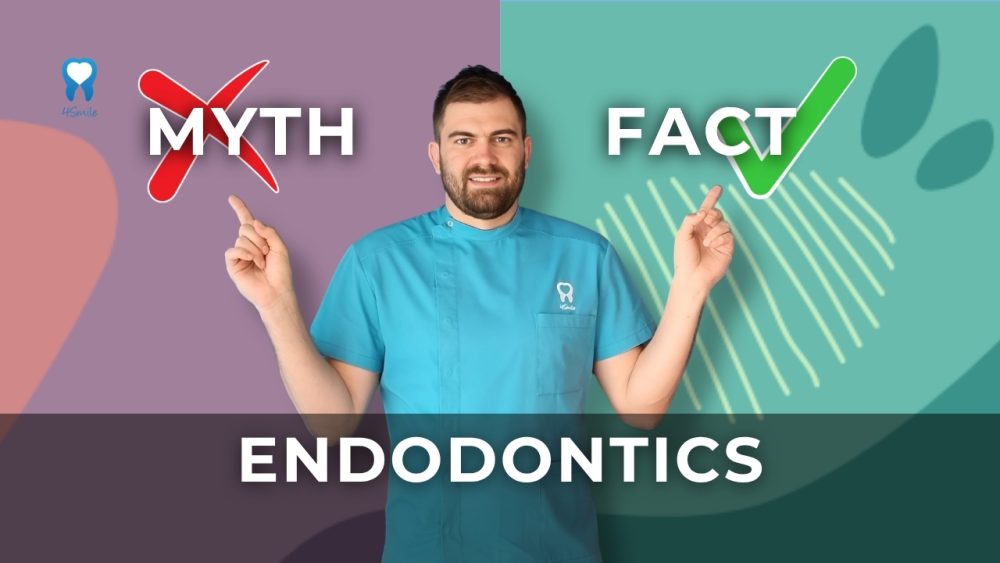
Are you afraid of root canal treatment? You are not alone. Many patients delay going to the dentist due to fear and numerous myths they have heard about endodontics. However, modern endodontics today is a safe, precise, and effective way to save a natural tooth.
In this blog, we debunk the most common endodontic myths and explain what root canal treatment actually entails.
What is endodontics?
Endodontics is a branch of dental medicine that deals with the treatment of the inside of the tooth, specifically the dental pulp and root canals. When a bacterial infection affects the inner tissue of the tooth, it is necessary to remove the infected content, disinfect the canals, and hermetically seal them in order to preserve the natural tooth.
The goal of endodontic treatment is not tooth extraction, but its preservation and the restoration of full function.
Myth 1: Root canal treatment is painful
Truth: Modern endodontics is performed pain-free
One of the most widespread myths is that root canal treatment is extremely painful. Thanks to modern anesthetics and advanced work techniques, the procedure is performed today under local anesthesia and is mostly completely painless for the patient.
After the procedure, mild sensitivity or discomfort may occur, which in most cases is easily controlled with recommended therapy.
Myth 2: Canals cannot be filled all the way to the end
Truth: Modern technology allows for maximum precision
Today, digital X-rays and electronic apex locators (canal length measuring devices) are used in endodontics.
Thanks to these technologies, root canals can be precisely cleaned, shaped, and filled along their entire length. This eliminates infection and significantly increases the long-term success rate of the treatment.
Myth 3: Endodontics is a risky procedure
Truth: The greatest risk is delaying treatment
Endodontic therapy is considered one of the safest procedures for preserving a natural tooth.
A much greater risk is ignoring symptoms and delaying treatment, as the infection can progress, damage the bone around the root, and lead to tooth loss.
Myth 4: If the tooth doesn’t hurt, root canal treatment isn’t necessary
Truth: Infection can exist without pain
Many patients assume that the absence of pain is a sign of a healthy tooth. However, inflammation of the dental pulp or a root infection can often progress without any symptoms.
For this reason, regular dental check-ups and X-rays are crucial for the early detection of problems.
Myth 5: Tooth roots are removed during endodontics
Truth: Tooth roots remain preserved
Tooth roots are not removed during endodontic treatment.
Only the infected or inflamed pulp inside the tooth is removed, while the roots remain preserved. After completing the therapy, the tooth is restored so it can function normally.
Myth 6: Root canal treatment takes a very long time
Truth: Many procedures are completed in a single visit
The duration of treatment depends on the number of canals, tooth anatomy, and the degree of infection.
For a large number of patients, treatment of a single tooth can be completed in one visit, while more complex cases may require additional visits.
Myth 7: Dental crowns cause root canal problems
Truth: Problems are caused by bacteria, not crowns
High-quality dental crowns do not cause root canal infections on their own.
The most common causes of problems are irregular oral hygiene, bacterial plaque buildup, and lack of regular check-ups. Special attention should be paid to cleaning the area around crowns, including using an oral irrigator (water flosser) and interdental brushes.
Myth 8: Tooth extraction is a better solution than root canal treatment
Truth: Preserving the natural tooth is always the first choice
In modern dentistry, tooth extraction is considered a last resort.
A natural tooth best transmits chewing forces, preserves the surrounding bone, and helps maintain a proper bite. Whenever possible, dentists will recommend saving the tooth with endodontic treatment.
Myth 9: Endodontics causes illnesses in the body
Truth: Scientific evidence does not support this claim
From time to time, claims can be found on the internet that root canal treatment causes various diseases.
Modern scientific research does not support such claims. On the contrary, the goal of endodontic treatment is to eliminate bacterial infection and protect the patient’s oral and overall health.
When is root canal treatment necessary?
A dentist may recommend endodontic treatment if the following occur:
- Severe or intermittent toothache
- Sensitivity to hot and cold
- Swollen gums
- Tooth discoloration
- Abscess or purulent inflammation
- Changes visible on an X-ray
It is important to emphasize that symptoms are not always present, which is why regular check-ups are extremely important.
Modern endodontics has little in common with the stories that have been passed down over the years. Thanks to advanced technology and modern working methods, root canal treatment today is a safe, precise, and effective procedure.
If your dentist has recommended endodontics, do not let myths prevent you from making a good decision. In many cases, root canal treatment is the best way to preserve your natural tooth and avoid extraction.
Frequently asked questions about endodontics (FAQ)
Is root canal treatment painful?
No. The procedure is performed under local anesthesia and most patients feel no pain during the procedure.
How long does endodontics take?
Depending on the complexity of the case, treatment can take anywhere from one to several visits.
Can a tooth be saved after a root infection?
In many cases, yes. That is precisely the primary goal of endodontic treatment.
Is it better to extract a tooth or treat the canals?
If there is an option to preserve the natural tooth, canal treatment is almost always preferable to extraction.
How do I know if I need endodontics?
A dentist can determine this after an examination and X-ray diagnostics. Even if you do not have pain, an infection can still be present.
Blog Author: Ivan Antolković, DDS, MSc