
In this week’s blog from Dental Center 4Smile, under the category Interesting Facts in Dentistry, we talk about unusual teeth in the animal kingdom.
Most people already know that sharks constantly grow new teeth, that venomous snakes use their fangs like poison-filled syringes, and that elephants have enormous tusks. As lovers of teeth of all shapes and sizes, today we wanted to take a moment to highlight a few lesser-known, bizarre teeth found in the wild.
Crabeater seals
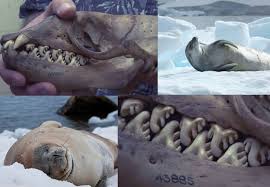
Contrary to their name, the diet of crabeater seals consists entirely of Antarctic krill (planktonic crustaceans), but you probably wouldn’t guess that by looking at their teeth. Where humans have molars, they have very bizarre teeth. These teeth resemble a normal sharp canine, but with many smaller canines protruding from the existing tooth. It looks as if they have equipped their jaws with deadly saws.
Although they look lethal, crabeater seals use their teeth in much the same way we use pasta strainers: they take a large gulp of seawater and then push the water back out, while their teeth keep all the tasty krill inside. Yum, yum!
Beavers
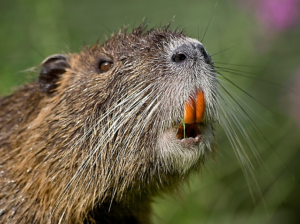
Waking up with orange teeth would be anyone’s nightmare – but that’s only because we’re not beavers. Beaver teeth turn orange over time due to the iron in the food they eat. The iron strengthens their teeth, helping them chew wood to build their dams. Although iron doesn’t completely protect their teeth from wear, nature has compensated by allowing their teeth to grow continuously.
Narwhals
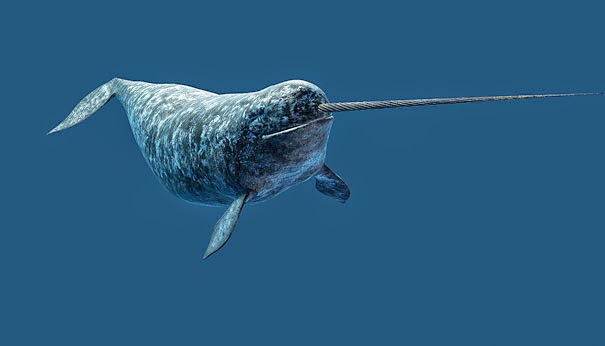
Narwhals are often called sea unicorns because of the single spiral “horn” that can protrude up to three meters from the heads of males. However, these are not actually horns. They are tusks – in this case, elongated canine teeth that grow through the upper lip. In most cases, only the left one grows that long, although some male narwhals end up with two full-length tusks, and occasionally a female narwhal may grow one or even both tusks.
As recently as May 2017, scientists were unsure of the tusk’s purpose, but new footage has shown that narwhals use their tusks to stun fish, making them easier to catch. The tusk likely serves additional purposes as well, since it contains millions of nerve endings, suggesting that narwhals may use it to sense their environment.
Let’s take care of our teeth!
We may not be able to stun fish, cut down trees, or hunt plankton with our ordinary human teeth, but we still need them to be healthy and strong so we can chew food, speak clearly, and share beautiful smiles with the people we love.
Remember to brush your teeth at least twice a day, clean between your teeth with an oral irrigator or dental floss at least once a day, schedule regular dental check-ups, and contact your dentist in Zagreb, Ivan Antolković, if you experience any dental problems between routine visits.
The animal kingdom is truly rich in a variety of cool teeth – but at Dental Center 4Smile, human teeth are still our favorite!